System Overview:
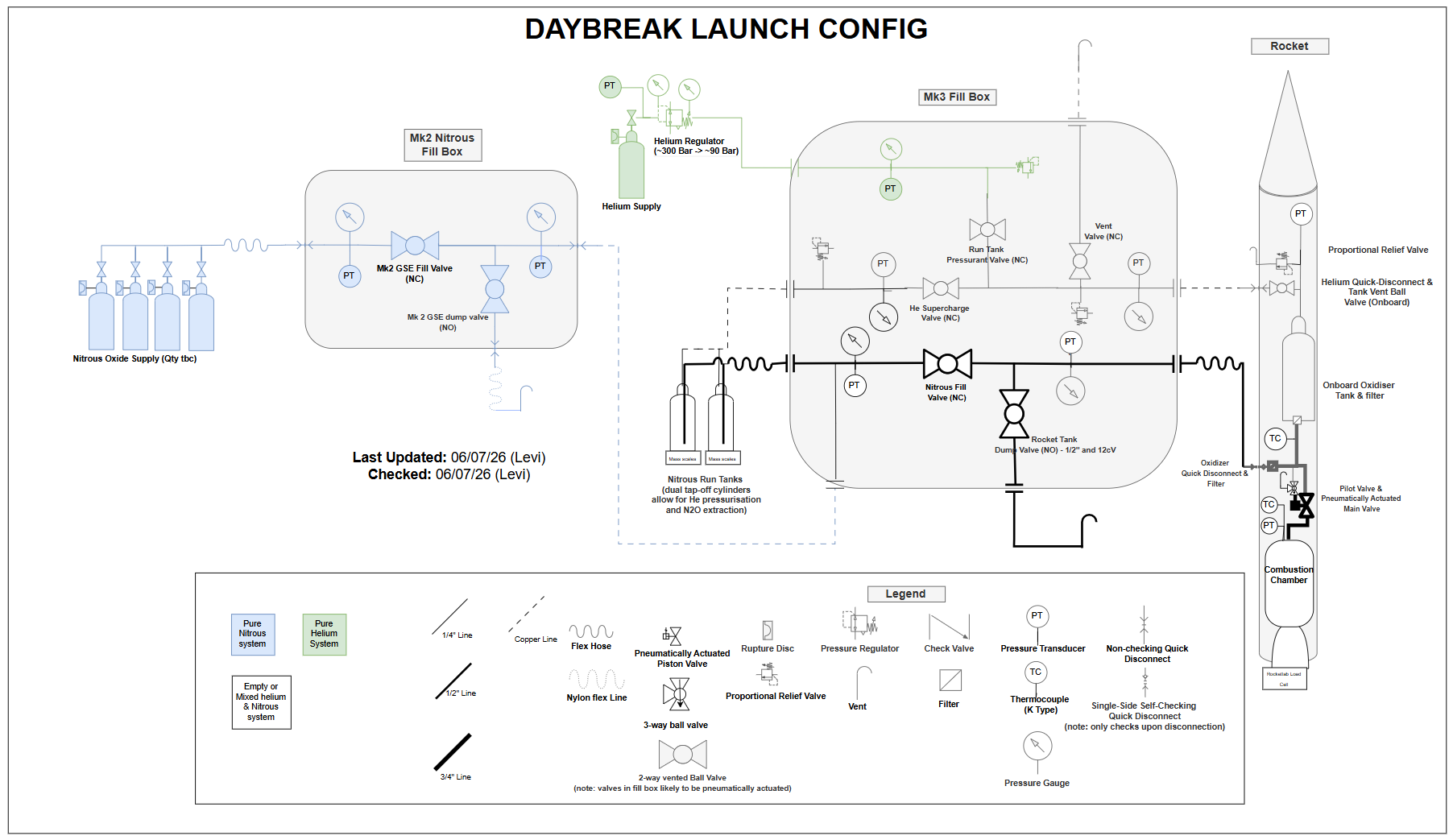
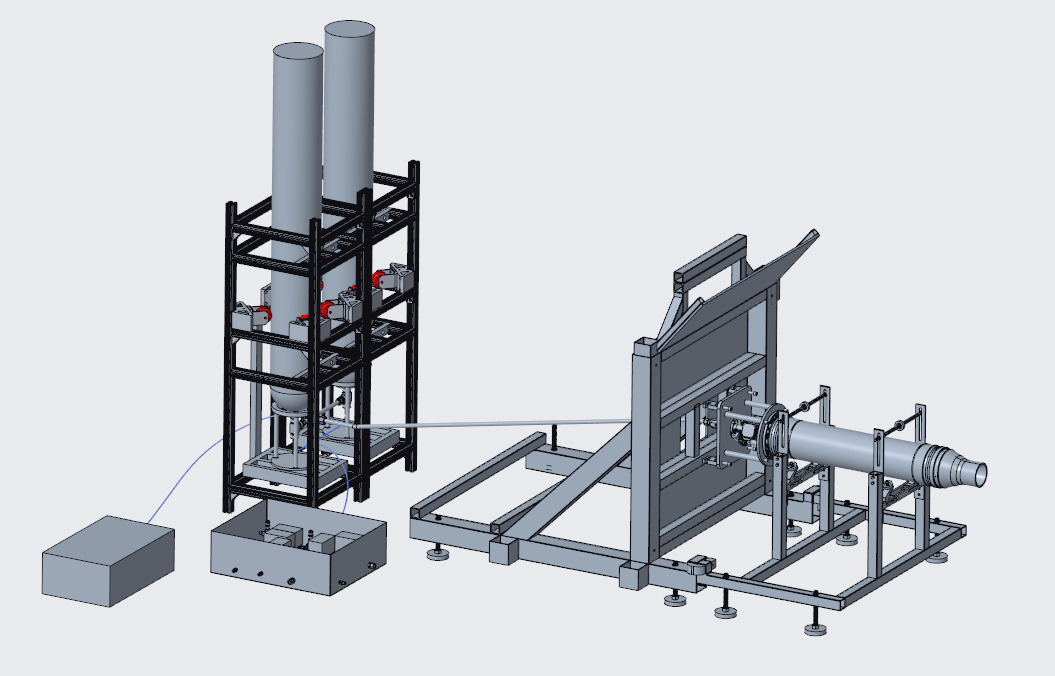
Daybreak is Monash HPR's newest rocket that will be flown to 100,000 feet at the FAR-OUT competition in 2027, powered by our SRAD Mk3.1 hybrid engine. I solely designed the fluids ground support equipment that used to fill, vents, and dumps the onboard oxidiser tank. The core of the system are two large G-class cylinders that are filled with nitrous oxide and pressurised with helium, feeding through a fill line onto the rocket. A separate fill line also supercharges the onboard tank with helium before launch.
I worked across the full stack for this system. P&ID development, component selection, procurement, python simulation, CFD, which is being fabricated, assembled, and hydrostatic tested before hotfire in October 2026.
Design and safety:
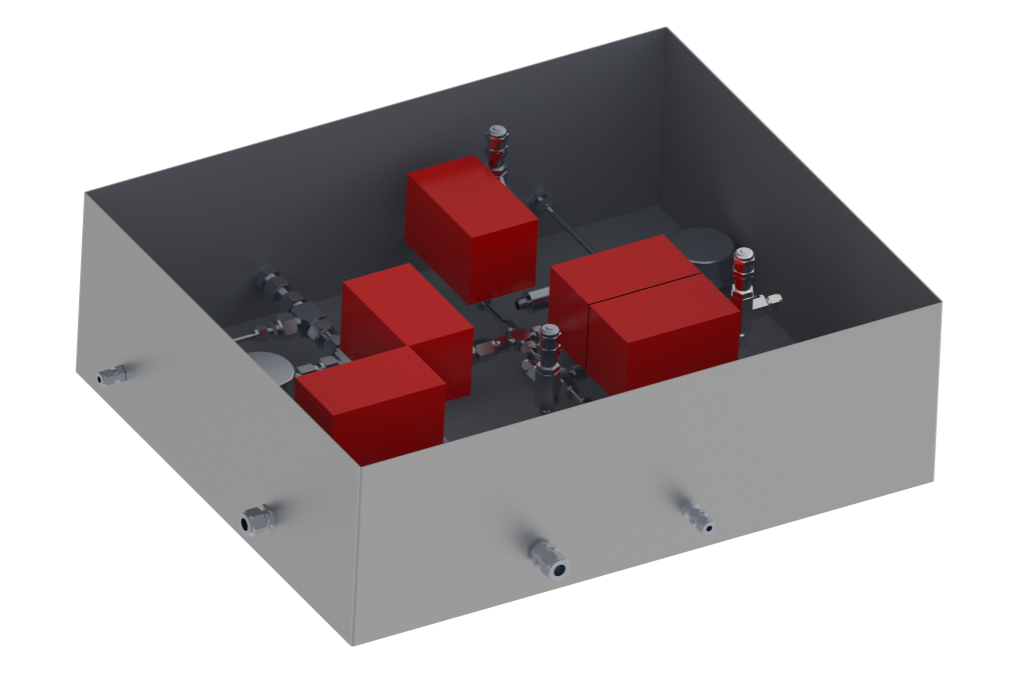
This is a full Swagelok system. I met with Swagelok to see if they'd consider supporting the project. I gave them our P&ID and a full overview of what we needed, and they went through their entire catalogue with us to match components against our fill and dump line requirements. That process ran across many in-person meetings with their team, plus their fitting training, which I used to build out a complete bill of materials against their catalogue. They quoted us on it and we came together with a sponsorship agreement, so the whole system is now Swagelok rated end to end.
Every fitting and hose was chosen against real service conditions: temperature, pressure rating, and fluid compatibility. The hoses carry a helium service rating, and the dump valve is sized to Cv 12 to satisfy the abort path flow competition requirement.
The GSE box runs on Hanbay electric actuators paired with Swagelok ball valves, each fitted with a battery reserve fail-safe matched to its nominal fail state.
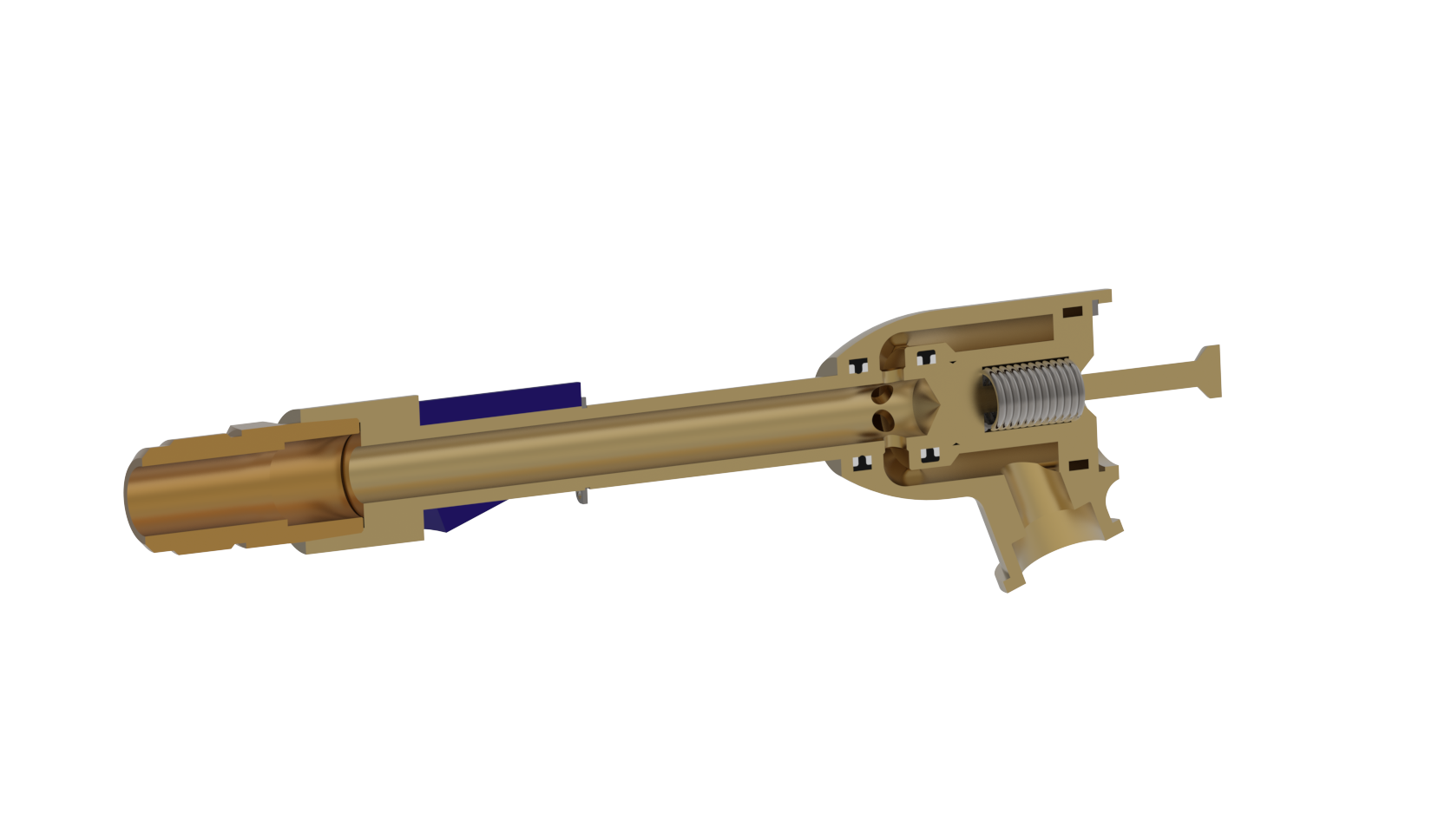
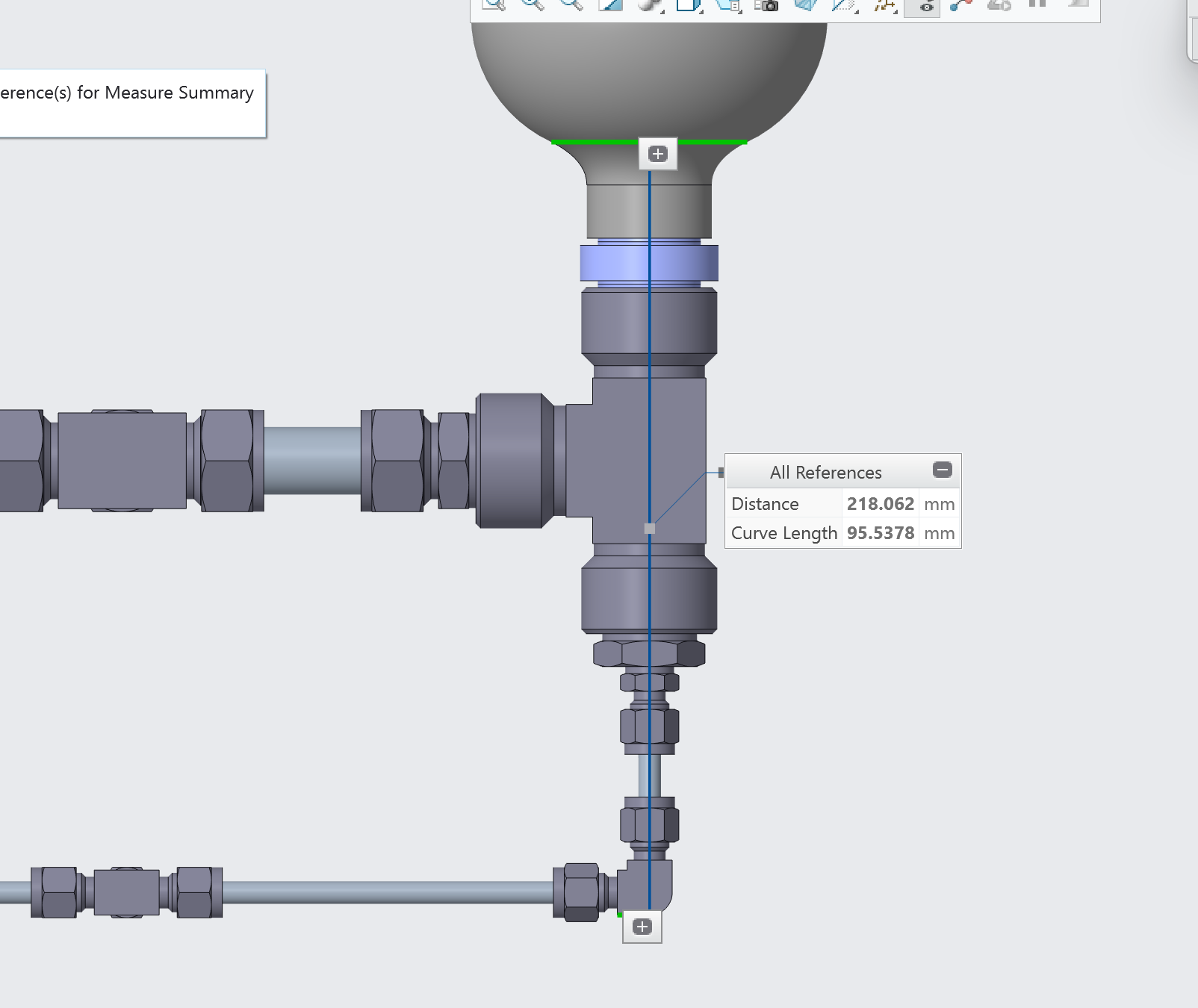
Drawing liquid nitrous oxide straight from a standard supply cylinder valve is too slow for our operation and scale. I designed a dip tube arrangement to replace the cylinder valve that extends a small helium tube up to the ullage of the upside down tanks, letting the system draw liquid-phase N2O down and around the helium tube, under pressure.
Simulations and CFD:
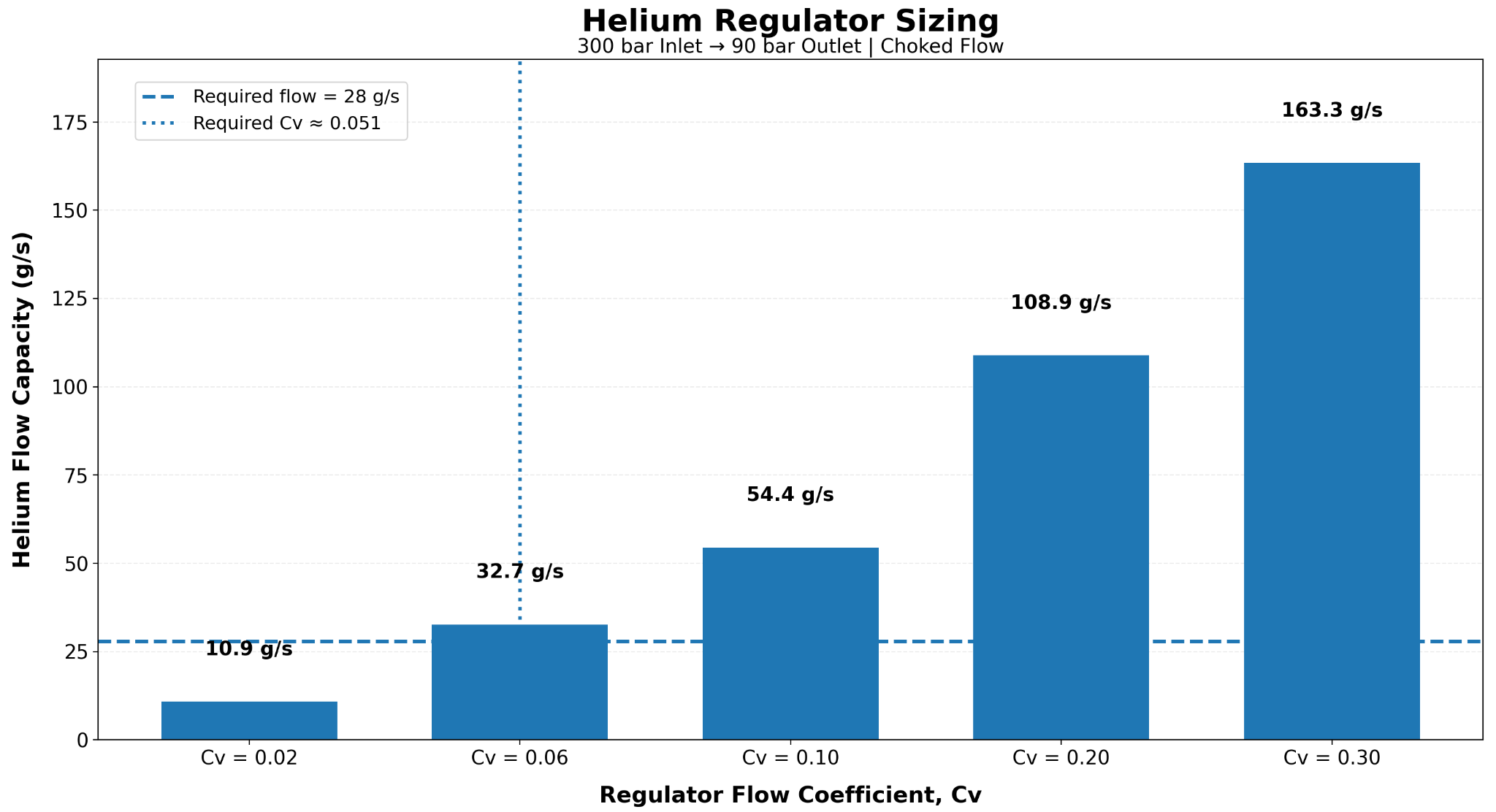
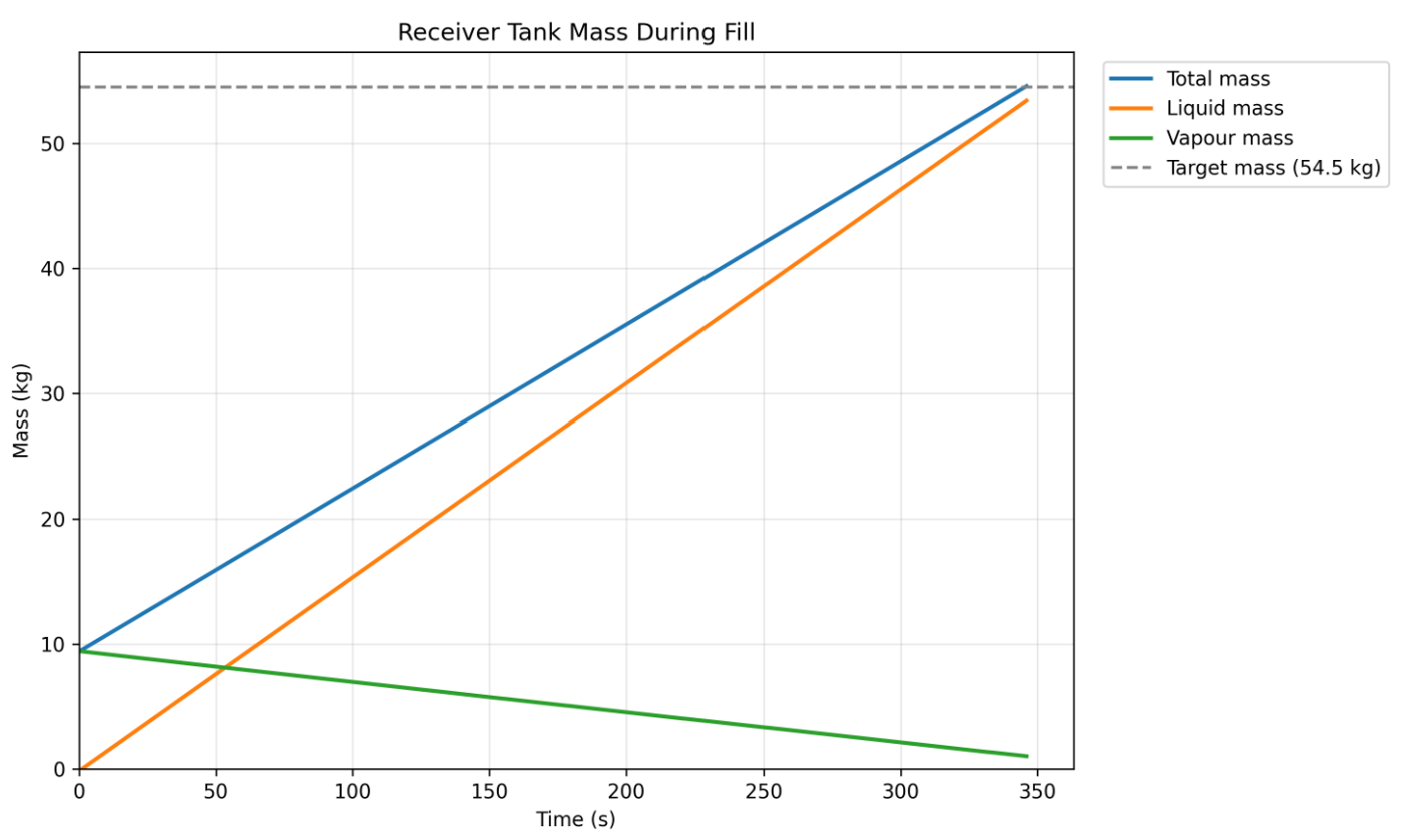
Building on technical papers written by Aspire Space I wrote my own nitrous oxide and helium python simulations to estimate the filling, supercharging and dumping times of our onboard oxidiser tank. I used this to select the right flow coefficient for the pressure regulator, and compare this with Swagelok's own Cv calculator.
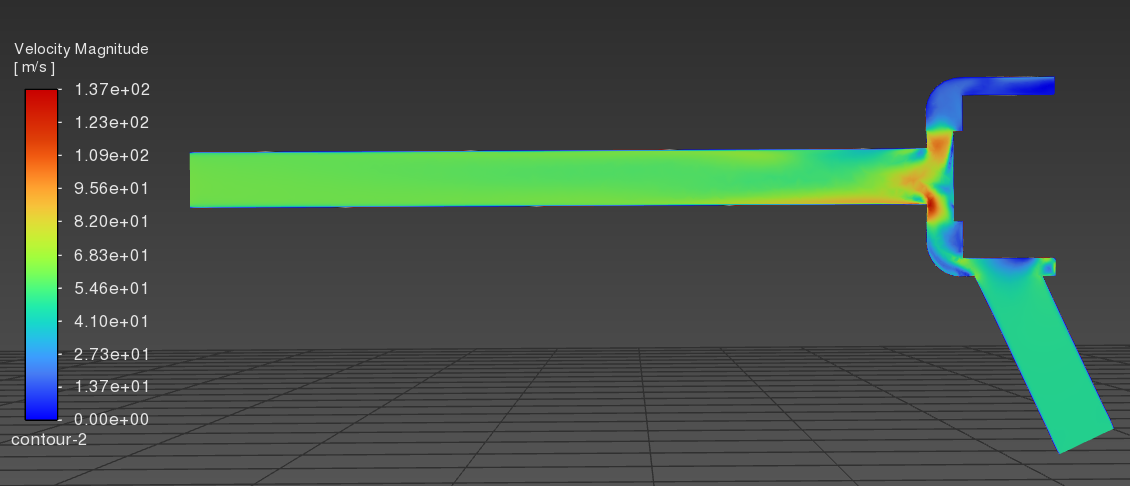
In order to be confident on the dump time in an abort case, I ran CFD on our quick disconnect and abort line assembly. Using mass flow calculations from the results I was able to determine the Cv of the ball valve needed on the dump line to meet the competition requirements of dump time.