Overview
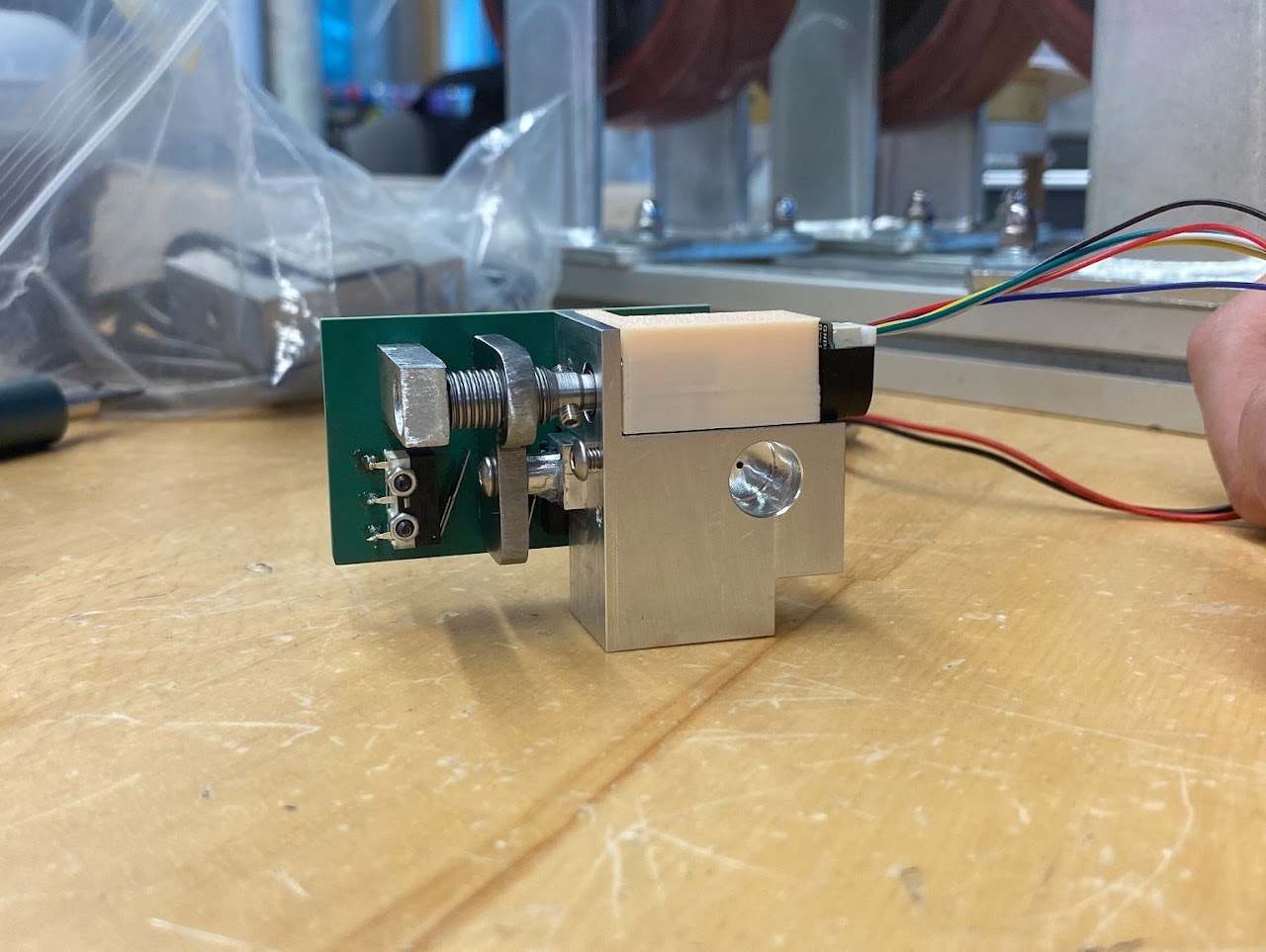
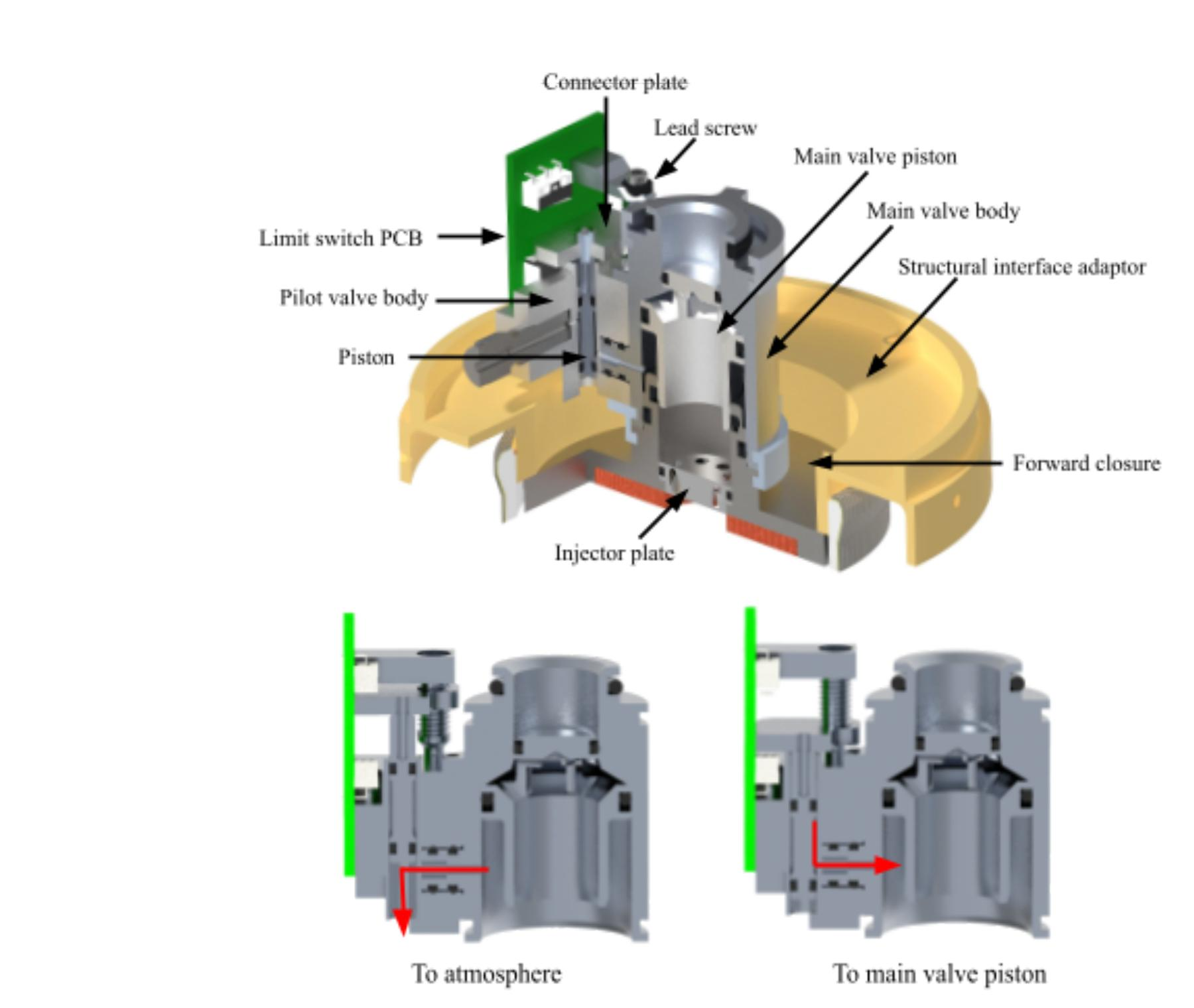
The pilot valve is what actuates the main valves controlling nitrous oxide flow from the oxidiser tank into the combustion chamber. It had to fit inside the small structural interface volume between the tank and chamber, which left room for only a tiny motor.
Design & Problem
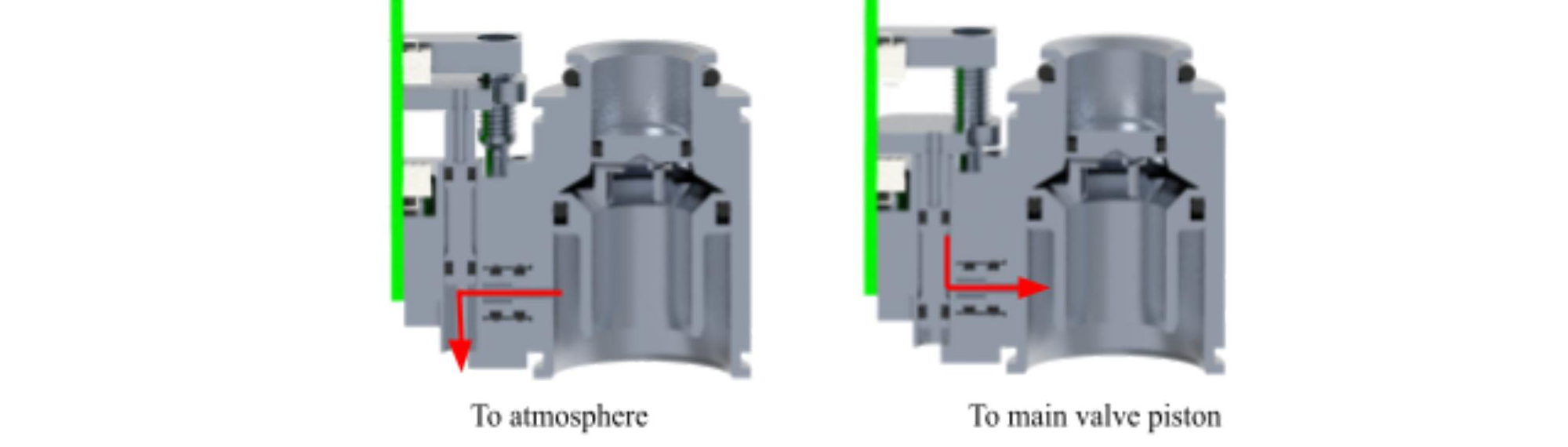
A three-way piston valve was chosen over alternatives like a ball or diaphragm valve, largely because it's simpler to manufacture and seal in-house. At this scale a ball or diaphragm equivalent would have been expensive to buy or difficult to machine at this scale. The piston moves inside a bore, sealed by o-rings, shifting its enclosed volume between two orifices: filling the space beneath the main valve with nitrous to hold it closed, or venting that space so the main valve springs open and lets nitrous through to the chamber.
With such a small available motor, torque was the limiting factor. Therefore the entire design had to be optimised to eliminate friction wherever it coul creep in. A main concern was minimising camming in the geometry, especially between the lead screw and piston, meaning they had to be aligned precisely enough that nothing bound up and drew excess current. The lead screw itself gave fast, reliable actuation with small travel, while also providing positional feedback via an encoder. Servo motors or solenoids couldn't offer this without a much larger, more power-hungry package.
Manufacturing
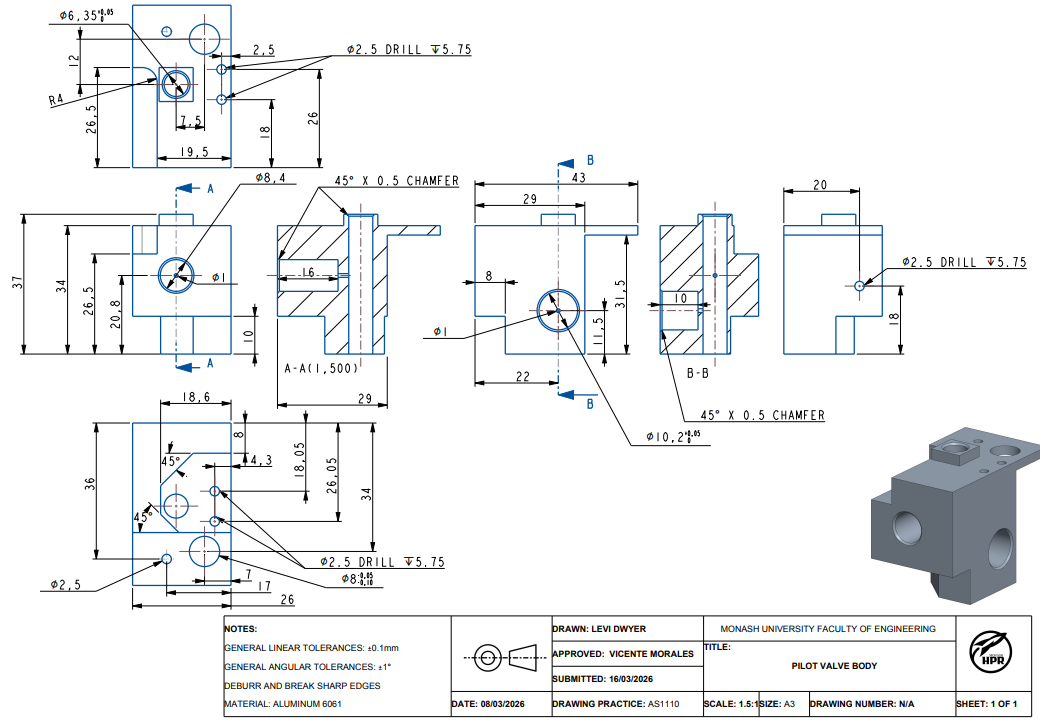
The pistons, lead screws, and connector plates were machined in-house, along with a custom PCB for the limit switches. Interference fits had to be tight enough to seal without adding unneccesary friction. O-rings had to be selected such that they could handle the cold temperatures of N₂O flashing without swelling. Lead screw thread and pitch was determined through requirements and calculations of travel and threat engagement count. The valve body was a 5-axis part, so drawings were done and the machining sent out externally.
Testing & Outcome
The valve went through extensive cold gas testing in Monash University's fluids labs, with several rounds of testing, remachining, and seal changes to bring current draw and sealing into spec. It has since passed thee times - once on a full engine cold gas test, once on a static hot fire - and finally on a successful flight to 10k feet in Victoria in June 2026. It is set to fly again on the Mk2.6 engine at AURC in September 2026.